
Mỹ Sơn Sanctuary history: Champa, Shiva and UNESCO
Mỹ Sơn Sanctuary history spans the development of a Hindu sacred centre from the 4th to the 13th century. The Cham temple towers stand in a mountain-enclosed valley in Vietnam. Their importance lies in the relationship between religion, royal authority and architectural tradition, rather than in a single monument built at one moment. UNESCO inscribed Mỹ Sơn on the World Heritage List in 1999.
The founding tradition associates the sanctuary with King Bhadravarman I and the worship of Shiva at the end of the 4th century. The name Bhadresvara joins the king's name with Shiva, also called Isvara. Royal rituals and temple foundations connected the religious centre to the rulers of Champa. Mỹ Sơn belongs to Cham history; approaching it as a Khmer temple complex would obscure that cultural setting.
The earliest sanctuary was a wooden building. The administration's historical account describes a fire in the 6th century and rebuilding under Sambhuvarman in the 7th. The brick remains therefore tell a story of successive construction and change. For practical arrangements before exploring that story, use the visitor overview and the guide to getting there.
Brick and sandstone architecture
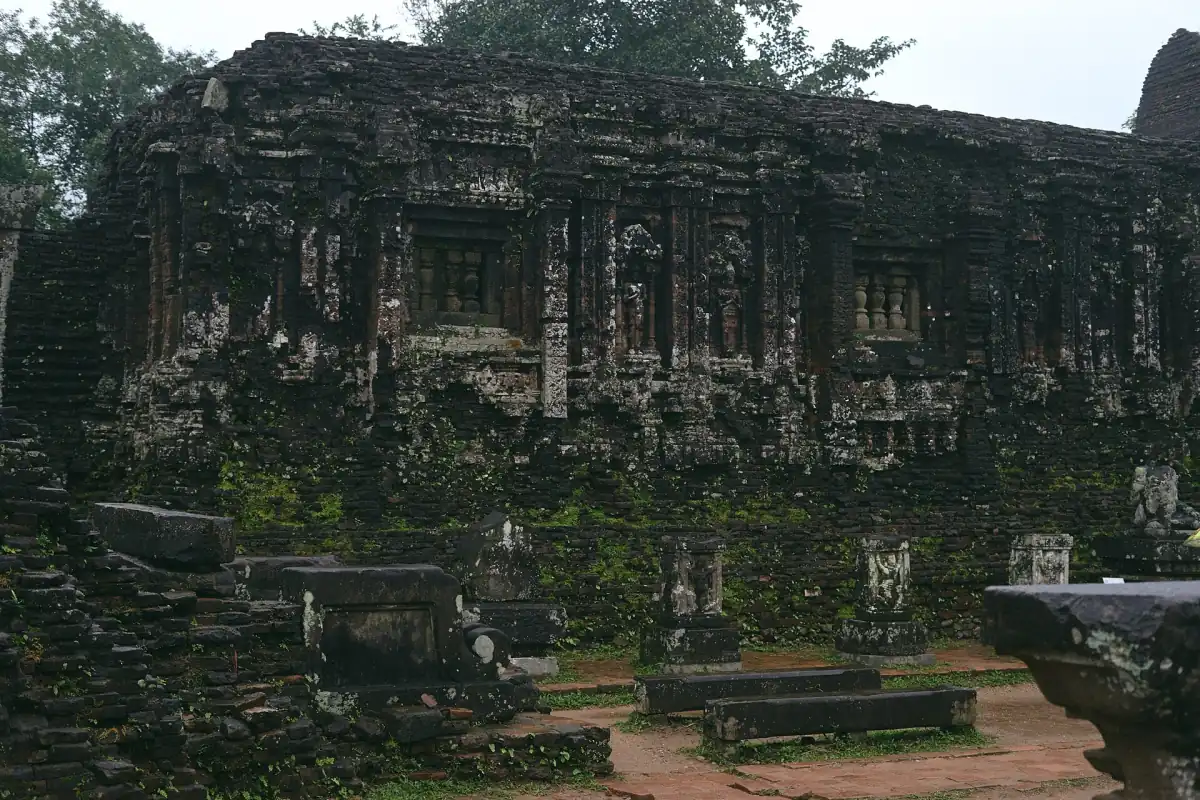
Mỹ Sơn's architecture combines brick construction with sandstone elements and distinct ceremonial building types. A kalan is the principal sanctuary, a gopura a gateway, and a mandapa an approach hall. Recognising these different functions makes a group of ruined structures easier to understand without imagining every building as another identical tower.
Principal entrances generally face east. Look at the relationship between a gateway, a hall and a sanctuary as well as individual decorative details. An intact-looking exterior is not an invitation to enter: follow the visitor signs and instructions in place during your visit. The historical building names describe functions, rather than a promised sequence of accessible interiors.
A guided temple visit
The guided visit includes admission and the electric shuttle inside the sanctuary.
Hand-picked tours, booked through GetYourGuide. Prices are indicative starting prices in US dollars (as of November 2026). Tap a tour for live availability and the current price in your currency.
A guided introduction to Mỹ Sơn's temples
The guided temple visit includes an English-speaking guide, sanctuary admission and the electric shuttle. Match the hotel pickup area to your stay.
Sculpture and art at Mỹ Sơn
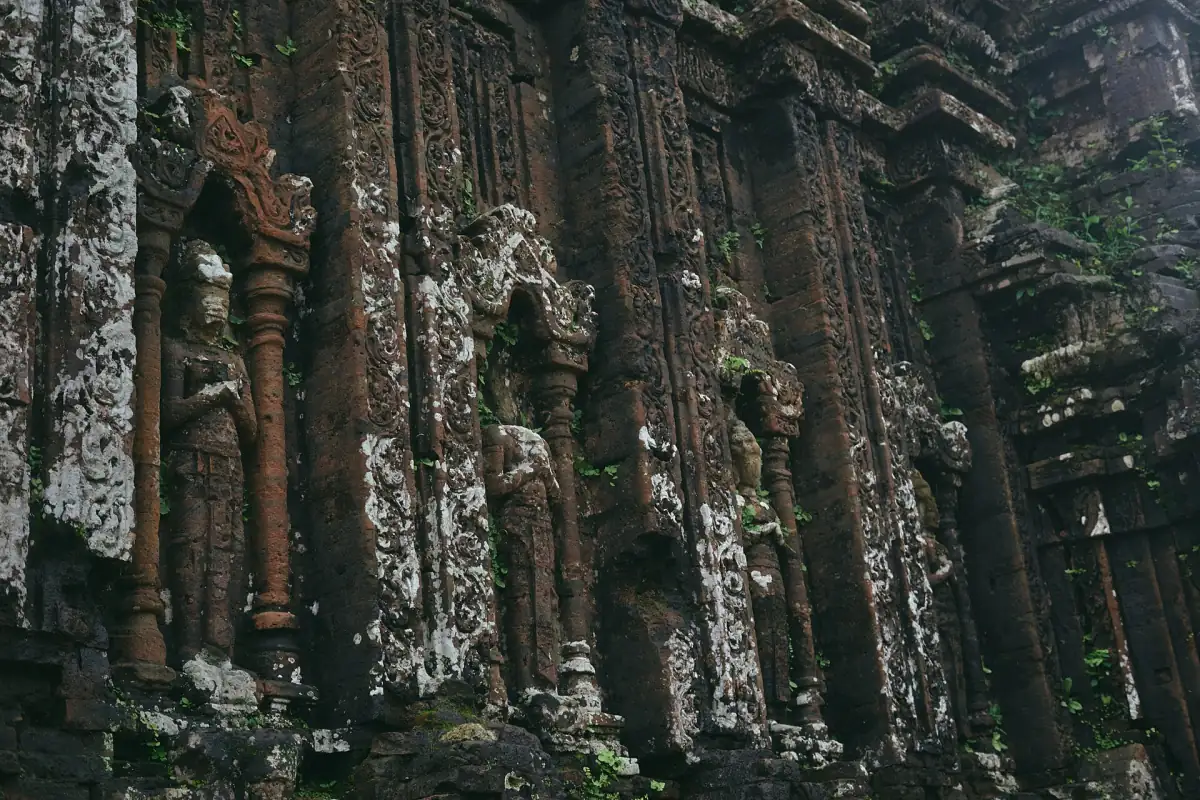
Mỹ Sơn's sculpture gives religious meaning to the architecture through Shiva imagery, protective figures and carved stone objects. The museum catalogue includes linga-yoni objects, pillars and architectural fragments. These objects help connect the surviving walls with the worship for which the buildings were created. Study the forms visually and leave the surfaces untouched.
Carving and construction belong to the same historical visit. A general temple guide can provide context, while the surviving fabric invites close observation. The guided visit offered here includes admission and the electric shuttle, but its inclusions do not prescribe a particular route through every lettered group. Compare other visit formats on the Mỹ Sơn tours page.
Groups A to H and surviving fragments
Mỹ Sơn's lettered groups identify historical clusters of buildings, rather than a checklist of intact towers. A conservation retrospective published on 25 February 2025 counted 72 historic structures in 13 groups. That inventory must be read as a record of the former sanctuary, not the number of buildings visitors can enter today.
Group A included A1, a principal tower destroyed during the war and associated with the name of an architectural style. Historical accounts identify B5 and C1 as surviving examples from the 10th century. E7 is distinguished by its curving, boat-shaped roof and underwent restoration from 2011 to 2015. In H, reduced walls and bases form part of the remains. Such differences reward looking at each group on its own terms instead of expecting a repeated complete temple.
War damage and restoration
Mỹ Sơn suffered severe war damage, including the destruction of A1 during US bombardments in 1969. Conservation accounts also describe bombing in 1972. These episodes form part of the sanctuary’s losses, and the surviving buildings should be understood alongside the fragments and missing structures.
Restoration has involved several international collaborations. Work at G involved UNESCO, Italy and Vietnam from 2003 to 2013. An administration report dated 14 January 2026 described work at E and F that had begun in February 2025. Plan your viewing around on-site directions rather than treating that report as an announcement of completion or a current access map. Stay on established visitor paths and avoid entering undeveloped ground.
The museum and the D1/D2 halls
The Mỹ Sơn Museum near the visitor approach is a separate building from the D1 and D2 halls within the temple area. D1 and D2 were mandapa halls later used to hold and display stone objects. The museum introduces the wider site; knowing this distinction prevents confusing a temple group with the visitor museum.
Allow space in your visit for both architectural remains and their interpretation. The museum catalogue offers context for religious imagery, but individual displays may change. Wear suitable shoes, avoid climbing monuments and keep artifacts untouched so that the physical evidence remains available to the next visitor.
Questions about Mỹ Sơn's past
When did Mỹ Sơn become a World Heritage Site?
1999 was the year Mỹ Sơn entered the UNESCO World Heritage List. The sanctuary's development extends from the 4th to the 13th century, connecting Cham religious practice with royal patronage. The inscription concerns the wider cultural site, rather than promising that every historic building survives intact.
What is the difference between a kalan and a mandapa?
A kalan at Mỹ Sơn is the principal sanctuary, while a mandapa is an approach hall. A gopura serves as a gateway. These names describe ceremonial functions and help explain how buildings relate to one another, even where only parts of their original walls and structures remain.
Is the museum the same as D1 and D2?
No, Mỹ Sơn Museum is separate from the D1 and D2 temple halls. The halls were later used for stone-object storage and display, while the museum near the visitor approach introduces the site. Treat each as a different part of understanding the sanctuary, and follow the current visitor directions.